%2B%2B%2B%2Bandresen%2Bsite%2Bbanner%2Blogotype.webp)
Chrome Craftsmanship: Hand-Built Emblem Signs Inspired by Pre-War Automobiles
When most people think of Andresen, they think of large-format graphics, environmental branding, museum exhibits, architectural signage, and event installations. But some projects call for something different—something that relies less on machines and more on craftsmanship.
For the Canum Private Auto Museum, Andresen was commissioned to create a series of custom dimensional emblem signs inspired by some of the rarest and most historically significant automobiles in the collection. The project challenged the team to move beyond traditional fabrication and into a world more closely resembling custom automotive restoration and coachbuilding.
The result was a collection of handcrafted museum-quality signs that celebrate automotive history through material, form, and meticulous craftsmanship.

Preserving Automotive History Through Custom Fabrication
The Canum Private Auto Museum, owned by renowned collector and appraiser Karra Canum, houses an extraordinary collection of rare vintage automobiles. The collection includes notable vehicles such as:
1937 BMW 326 Sport Cabriolet
1940 BMW 335 Cabriolet
1952 Cunningham C-3 Coupe
1935 BMW 315/1 Sport Roadster
1965 BMW 3200CS Bertone
Occasionally opened to guests, automotive media, and specialty publications, the museum presents these vehicles as pieces of rolling history.
To complement the collection, Andresen was tasked with creating four custom emblem signs inspired by the heritage, coachbuilders, and manufacturers associated with the automobiles on display.
The signs included:
BMW Kurpfalz emblem
Carrosserie Erdmann & Rossi Johannisthal Berlin-Halensee emblem
G. Michelotti emblem
Illuminated MG Motors sign
Rather than creating exact reproductions, the goal was to develop enlarged interpretations of the original emblems—museum-quality display pieces that captured the character and craftsmanship of the originals while creating a stronger visual presence within the exhibit environment.
Researching Automotive Heritage
Every project began with research. The client provided photographs of original badges and emblems, but because many of the vehicles represented in the collection are exceptionally rare, additional investigation was required to gather more reference material.
The Andresen team spent time locating additional historical photographs and researching alternate views of the emblems to better understand their construction, proportions, and surface details.
This process helped ensure the final pieces remained faithful to the spirit of the originals while allowing for interpretation at a much larger scale.
The result was a series of custom emblem signs that honored the legacy of the vehicles while functioning as exhibit pieces in their own right.
Starting With Craftsmanship
Unlike many fabrication projects that begin entirely in software, these signs often started the old-fashioned way.
Some began as hand sketches on grid paper. Others were developed through scaled drawings and physical measurements before eventually being translated into digital files.
Because every emblem had unique contours, proportions, and dimensional characteristics, the design process required both artistic judgment and fabrication planning.
This project felt less like creating signage and more like recreating pieces of automotive history.
Combining Modern Equipment with Traditional Techniques
Although advanced fabrication equipment played an important role in the project, the machinery was primarily used to create the foundation of each piece.
Initial cutting, routing, and shaping were performed using:
Kongsberg Digital Cutting System
Used for routing and cutting foundational components from various substrates.
Zünd Digital Cutter
Used for precision shaping, cutting, and fabrication preparation.
Trotec Speedy 400 Laser Engraver & Cutter
Used for intricate details and precision-cut components.
EFI Printing Systems
Used to produce custom decals and graphic elements incorporated into certain signs.
While these tools provided accuracy and consistency, the majority of the work happened after the machinery stopped.

Once components were cut, Andresen’s fabrication team hand-assembled the signs using techniques more commonly associated with custom automotive bodywork than traditional sign production.
Components were:
Glued using industrial adhesives
Filled and sculpted with Bondo
Sanded by hand
Shaped and refined
Primed and painted
Polished and detailed
Wired and assembled
The project became an exercise in craftsmanship as much as fabrication.
Selecting Materials for Authenticity
Achieving the desired appearance required a combination of materials, each chosen for its unique properties and visual characteristics.

Materials utilized throughout the project included:
Acrylic
PVC
Aluminum composite
Routed HDU
Vinyl graphics
Many signs incorporated multiple materials layered together to achieve the proper depth, profile, and finish.
These materials provided the flexibility needed to recreate everything from delicate emblem details to substantial cast-metal appearances.
Recreating Historic Automotive Finishes
One of the most demanding aspects of the project was reproducing the look and feel of historic automotive emblems.
The original badges featured a variety of finishes that could not simply be printed or fabricated directly.
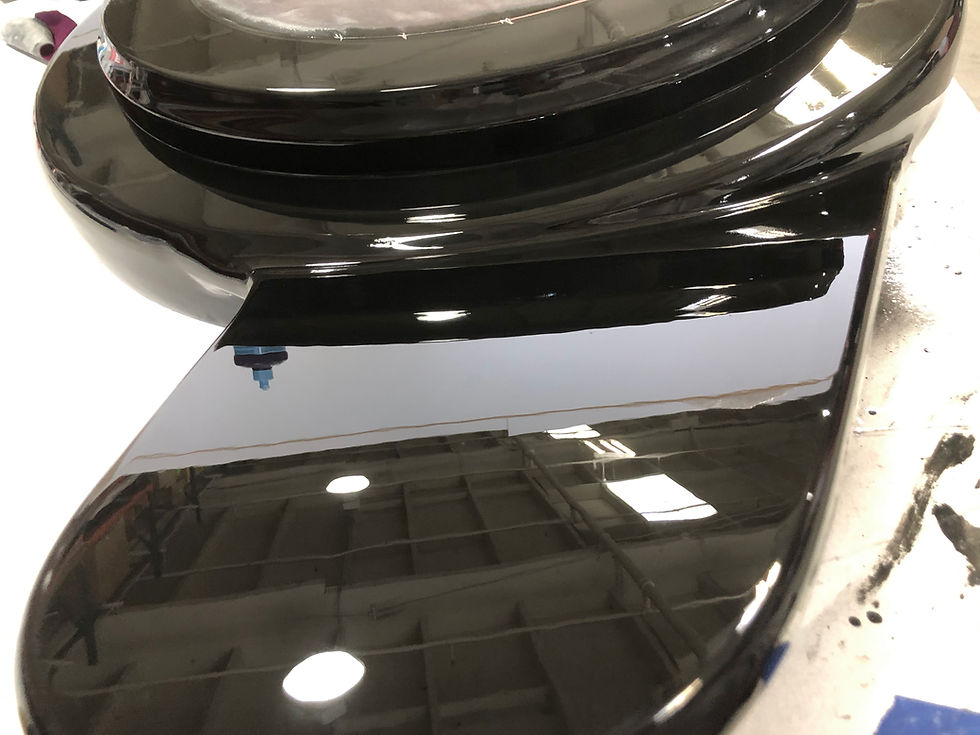
Instead, Andresen developed custom finishing processes to replicate:
Chrome surfaces
Brushed aluminum
Cast metal appearances
Polished metallic finishes
Each sign required multiple rounds of sanding, filling, priming, painting, and polishing before the final finish could be achieved.
Many routed components were refined entirely by hand to create smooth transitions and authentic contours that closely resembled the original automotive emblems.
The objective was simple: the signs needed to feel as though they belonged alongside the vehicles themselves.
The Centerpiece: An Illuminated MG Motors Sign

Among the four signs, one project stood above the rest in both scale and complexity.
The illuminated MG Motors sign was inspired by the spoke and center hub design of a 1934 MG PA/B Le Mans racing car, part of the all-female MG Works team that competed in the 1935 24 Hours of Le Mans.
The design featured a central hub surrounded by wing-like elements extending outward from both sides.
These sweeping forms created significant fabrication challenges.
The wings featured curved, mirrored shapes that required extensive hand shaping and finishing to ensure symmetry. The dimensional construction demanded precise alignment and careful sculpting to maintain consistent profiles across both sides of the sign.

As the largest piece in the project, it also required the greatest amount of labor and the longest fabrication timeline.
To further increase complexity, the sign incorporated an internal LED lighting system complete with custom wiring and a dedicated power harness.
The combination of custom fabrication, lighting integration, curved surfaces, and hand finishing made it the most technically demanding piece in the collection.
The completed sign became both an exhibit element and a work of craftsmanship in its own right.
Installation Within the Museum
Once fabrication was complete, Andresen handled the installation of all four signs within the museum.

Each sign was mounted directly to the walls using concealed hardware systems that allowed the pieces to appear cleanly integrated into the exhibit environment.
Careful placement ensured each emblem complemented the vehicle it represented while maintaining a cohesive visual presentation throughout the space.
The hidden mounting approach helped create a gallery-quality appearance that kept attention focused on both the automobiles and the custom fabricated signs.
More Than Signage
Projects like the Canum Private Auto Museum demonstrate a side of Andresen that many people never see.
While the company is widely recognized for environmental graphics, museum exhibits, large-format printing, architectural signage, and event branding, this project showcased expertise in custom dimensional signage, custom fabricated signs, museum signage fabrication, custom emblem signs, dimensional logo signs, handcrafted signage, illuminated custom signs, automotive museum signage, custom aluminum signs, custom acrylic signs, and custom LED signs.
More importantly, it highlighted the craftsmanship that exists behind the equipment.
The machinery provided the starting point, but the finished pieces were ultimately shaped by hand, refined through experience, and completed through the kind of attention to detail that cannot be automated.
Preserving History Through Craftsmanship

The final collection of emblem signs does more than identify the vehicles within the Canum Private Auto Museum. It helps tell their stories.
By transforming historic automotive emblems into handcrafted dimensional works of art, Andresen created exhibit pieces worthy of the automobiles they accompany.
It is a project that reflects the same qualities found in the vehicles themselves—precision, craftsmanship, heritage, and a commitment to excellence that stands the test of time.


Comments